Author: Möbelfertigung

Robotics Research: How Asia, Europe and America Invest

Countries around the world invest in robotics to support developments in industry and society. What are the exact targets of robotics research funding programs (R&D) officially driven by governments in Asia, Europe and America today? This has been researched by the International Federation of Robotics and published in the 2023 update paper of “World Robotics R&D Programs”.

“The 3rd version of World Robotics R&D Programs covers the latest funding developments including updates in 2022,” says Prof. Dr. Jong-Oh Park, Vice-Chairman IFR Research Committee and member of the Executive Board. The overview shows that the most advanced robotics countries in terms of annual installations of industrial robots – China, Japan, USA, South Korea, Germany – and the EU drive very different R&D strategies:

Robotics R&D programs – officially driven by governments
In China, the 14th Five-Year Plan for Robot Industry Development, released by the Ministry of Industry and Information Technology (MIIT) in Beijing on 21st December 2021, focuses on promoting innovation. The goal is to make China a global leader for robot technology and industrial advancement. Robotics is included in 8 key industries for the next 5 years. In order to implement national science and technology innovation arrangements, the key special program “Intelligent Robots” was launched under the National Key R&D Plan on 23rd April 2022 with a funding of 43.5 million USD. The recent statistical yearbook “World Robotics” by IFR shows that China reached a robot density of 322 units per 10,000 workers in the manufacturing industry: The country ranks 5th worldwide in 2021 compared to 20th (140 units) in 2018.

In Japan, the New Robot Strategy” aims to make the country the world´s number one robot innovation hub. More than 930.5 million USD in support has been provided by the Japanese government in 2022. Key sectors are manufacturing (77.8 million USD), nursing and medical (55 million USD), infrastructure (643.2 million USD) and agriculture (66.2 million USD). The action plan for manufacturing and service includes projects such as autonomous driving, advanced air mobility or the development of integrated technologies that will be the core of next-generation artificial intelligence and robots. A budget of 440 million USD was allocated to robotics-related projects in the “Moonshot Research and Development Program” over a period of 5 years from 2020 to 2025. According to the statistical yearbook “World Robotics” by IFR, Japan is the world´s number one industrial robot manufacturer and delivered 45% of the global supply in 2021.

The 3rd Basic Plan on Intelligent Robots of South Korea is pushing to develop robotics as a core industry in the fourth industrial revolution. The Korean government allocated 172.2 million USD in funding for the “2022 Implementation Plan for the Intelligent Robot”. From 2022 to 2024 a total of 7.41 million USD is planned in funding for the “Full-Scale Test Platform Project for Special-Purpose Manned or Unmanned Aerial Vehicles”. The statistical yearbook “World Robotics” showed an all-time high of 1,000 industrial robots per 10,000 employees in 2021. This makes Korea the country with the highest robot density worldwide.

Horizon Europe is the European Union’s key research and innovation framework program with a budget of 94.30 billion USD for seven years (2021-2027). Top targets are: strengthening the EU’s scientific and technological bases, boosting Europe’s innovation capacity, competitiveness and jobs as well as delivering on citizens’ priorities and sustaining socio-economic models and values. The European Commission provides total funding of 198.5 million USD for the robotics-related work program 2021-2022.

Germany´s High-Tech Strategy 2025 (HTS) is the fourth edition of the German R&D and innovation program. The German government will provide around 69 million USD annually until 2026 – a total budget of 345 million USD for five years. As part of the HTS 2025 mission, the program “Shaping technology for the people” was launched. This program aims to use technological change in society as a whole and in the world of work for the benefit of people. Research topics are: digital assistance systems such as data glasses, human-robot-collaboration, exoskeletons to support employees in their physical work, but also solutions for the more flexible organization of work processes or the support of mobile work. According to the report “World Robotics” by IFR, Germany is the largest robot market in Europe – the robot density ranks in 4th place worldwide with 397 units per 10,000 employees.

The National Robotics Initiative (NRI) in the USA was launched for fundamental robotics R&D supported by the US government. The NRI-3.0 program, announced in February 2021, seeks research on integrated robot systems and builds upon the previous NRI programs. The US government supported the NRI-3.0 fund to the sum of 14 million USD in 2021. Collaboration among academics, industry, government, non-profit, and other organizations is encouraged. The “Moon to Mars” project by NASA for example highlights objectives to establish a long-term presence in the vicinity of and on the moon. The projects target research and technology development that will significantly increase the performance of robots to collaboratively support deep space human exploration and science missions. For the Artemis lunar program, the US government is planning to allocate a budget of 35 billion USD from 2020 to 2024. The statistical yearbook “World Robotics” by IFR shows that robot density in the United States rose from 255 units in 2020 to 274 units in 2021. The country ranks 9th in the world. Regarding annual installations of industrial robots, the USA takes 3rd position.

Acquires renowned Austrian company Bertschenergy

On January 1, Dieffenbacher expanded its portfolio of solutions by acquiring the know-how and key assets of Bertschenergy, based in Bludenz, Western Austria, through the newly formed Dieffenbacher Energy GmbH subsidiary. The acquisition accelerates Dieffenbacher’s ability to support its customers while helping to shape Europe’s rapidly evolving energy future.

Dieffenbacher’s increased portfolio will include fluidized bed combustion systems for solid fuels (e.g. biomass), gas and steam turbines for power and steam production, and industrial waste heat systems. In addition, the acquisition further extends Dieffenbacher’s long-time use of conventional grate firing in energy systems.

“The know-how of employees and Bertschenergy’s advanced technologies are an excellent fit with the strategic orientation of our company. They are a perfect complement for our Wood and Recycling business units,” said CEO Christian Dieffenbacher. “Dieffenbacher will continue to use the existing company headquarters in Bludenz (province of Vorarlberg), maintain the existing product portfolio and plans to take on all 150 employees. We will continue to develop the site with an emphasis on sustainability and reliability to reinforce to both customers and employees our long-term perspective,” he added.

Bertschenergy and Dieffenbacher operate in some of the same markets and have successfully implemented customer projects together in the past. Measures to integrate Bertschenergy employees into Dieffenbacher and assure the transition of ongoing customer projects are to be completed in January.

The industry network “möbelfertigung” wishes a happy new year

“Basically, it is always the connections with people that give life its value.” (Wilhelm von Humboldt)

We are glad that we have very many of these connections to customers, partners and friends in the industry and that we are able to maintain them with our various formats – from print objects to various conferences to “Möbelfertigung. The Podcast” – are able to maintain.

We sincerely thank you for the trust you have placed in us in 2022, on whatever channel. The entire team wishes you a happy new year and a successful 2023. Stay healthy!

Becomes first PU foam manufacturer to have its climate targets approved by the Science Based Targets initiative

The Vita Group, one of Europe’s leading providers of flexible polyurethane (PU) foam, has committed to set company-wide emissions reduction targets in line with the Science Based Targets initiative (SBTi), which aims to drive ambitious climate action across the private sector globally.

Vita, based in Manchester, says this makes it the first PU foam manufacturer to set science-based emissions reduction targets commensurate with the level of decarbonization required to meet the goals of the Paris Agreement – to limit global warming to well below 2°C above pre-industrial levels and to continue efforts to limit warming to 1.5°C.

The SBTi’s Target Validation Team classified Vita’s scope 1 and 2 target and has determined that it is in line with a 1.5°C trajectory, currently the most ambitious designation available through the SBTi process. Vita has also further committed to reduce absolute Scope 3 emissions by 13.5% by 2030 from a 2019 base year.

The announcement builds upon the launch earlier this year of Vita’s first sustainability report, which detailed how the business has balanced commercial objectives with morally and ethically sound business practices. Over the last two years the company has reduced its direct and indirect greenhouse gas emissions by 50%, with other successes including reducing waste sent to landfill to just 2.01% and launching its first foam range made from raw materials extracted from end-of-life products.

These significant environmental achievements have been outlined in Vita’s Sustainability Report 2021 Enhancing Everyday Life. The sustainability strategy outlined in the report was created in collaboration with Schneider Electric UK, a global leader in the digital transformation of energy management and automation.

Ian Robb, CEO of The Vita Group, said: “Having our climate targets validated by the SBTi is the latest milestone on our sustainability journey, and is a very proud moment for our business. When we launched our sustainability report earlier this year it didn’t just outline what we’d done, but how we would not stop until we were able to reach our gamechanging targets, such as sending zero manufacturing waste to landfill by 2040.
Rapid and deep emission cuts are pivotal if we are to halve global emissions before 2030 and achieve net-zero before 2050. Over the coming months I look forward to speaking to our supply chain and customers about why they should join us in aligning with climate science by committing to science-based 1.5°C and net-zero targets too.”

The SBTi is a global body enabling businesses to set ambitious emissions reductions targets in line with the latest climate science. It is focused on accelerating companies across the world to halve emissions before 2030 and achieve net-zero emissions before 2050.

The initiative is a collaboration between CDP, the United Nations Global Compact, World Resources Institute (WRI) and the World Wide Fund for Nature (WWF) and is one of the We Mean Business Coalition commitments. The SBTi defines and promotes best practice in science-based target setting, offers resources and guidance to reduce barriers to adoption, and independently assesses and approves companies’ targets.

Celebrates the first record with Küpeliler Endüstri AS

A “first board” in the truest sense of the word was produced by the Turkish wood-based panel producer Küpeliler Endüstri AS on December 3rd: The first continuously produced OSB board with “Contiroll” press technology in Turkey was pressed at the Kutahya site.

The new OSB line with a “Contiroll” press in the 4′ x 33.8 m format, extendable to 48,7 m, marks an absolute premiere in the Turkish market. It will be used at Küpeliler Endüstri AS, a company that applies its innovative strength in seven business areas, in addition to the wood-based panel industry, for example, in the cement and packaging industries.

The continuous press technology optimizes both thickness tolerances and mechanical properties compared to conventional cycle press lines. The “OSB-Contifinish” also ensures excellent surface quality. This pays off for the general high quality of OSB, which Küpeliler Endüstri AS places primarily in the construction industry, for example, in the form of cladding.

“We, Team Siempelkamp, not only congratulate our partner warmly on this milestone, but also say a heartfelt ‘thank you’ for the great cooperation. It was a pleasure to be able to implement this project together and to set a new benchmark in the Turkish market with this premiere,” says Ulrich Kaiser, Head of Sales Wood/New Plants at Siempelkamp.

Merry Christmas

“Radiant, like a beautiful dream,
the Christmas tree stands before us.
Look how golden light
on the delicate baubles.
“Merry Christmas” it sounds softly
And a star goes on its journey.
Shines brightly from the firmament –
down to the whole world.”
(author unknown)

In this spirit, the “möbelfertigung” team and the entire Vincentz Network wish you a happy holiday season.

Egger

Satisfactory figures in the first half of the year

Egger has closed the first half of its 2022/2023 fiscal year (ending October 31, 2022) with consolidated sales of EUR 2.26 billion (up 14.0 percent year-on-year). The increase in sales was primarily due to the sharp rise in raw material, energy and logistics costs, which led to higher selling prices. By contrast, the many uncertainties and crises and their impact on the energy and raw material markets, as well as massive inflation and the associated loss of purchasing power, have caused a noticeable drop in demand. As a result, the outlook for the second half of the year is subdued.

“The very strong results of the previous year can be attributed to the extremely high demand in the wake of the cocooning effect from the Corona crisis and can therefore be classified as exceptional,” said Thomas Leissing, spokesman for Egger Group Management and responsible for Finance/Administration. “This demand boom has noticeably weakened since the spring of 2022. In the meantime, we see declines in demand in almost all markets. At the same time, we continue to face a variety of uncertainties.”

In the first half of 2022/23, sales of EUR 2,255.4 million and EBITDA of EUR 353.7 million (down 26.1 percent year-on-year) were achieved. The EBITDA margin was 15.7 percent, while the equity ratio remained at the high level of 51.2 percent.

This result reflects the highly volatile conditions and developments of recent months. The decline in earnings is spread across all divisions, although the prior-year period was also characterized by an exceptionally good market environment and margin level in all areas. The decline was most pronounced in the Building Products Division, which had achieved record results in the previous year due to the construction boom. In the Decorative Products Division, volume increases were achieved only at the newest plant in Lexington, NC (US). Declines in earnings were mainly recorded by the Eastern European plants, where the effects of the Ukraine crisis were most directly felt. Earnings development in the Flooring Products Division also declined due to falling demand, particularly in the DIY sector.

Capital expenditure amounted to € 229.7 million in the first half of the year (141.1 million in the same period of the previous year). This capital expenditure went in particular towards backward integration projects, enhancing sustainability performance in production, and optimizing the internal flow of materials and enhancing efficiency in warehousing.

In the first half of 2022/23, prices on all raw material markets relevant to Egger rose significantly and remain at a very high level. Availabilities were also under pressure. With regard to a potential looming energy shortage, the company is well secured thanks to its own biomass power plants at all major locations. With this strategy, Egger is striving to largely decouple itself from fossil fuels, while at the same time avoiding the purely thermal utilization of raw materials and promoting the cascading use of the valuable raw material wood.

The overall economic outlook remains highly uncertain in the coming months and will continue to be strongly influenced by the challenges on the energy and raw material markets. This also results in subdued earnings expectations for the second half of the 2022/23 financial year. Egger anticipates unchanged high price levels and stable sales in the medium term, but moderate demand from the main markets. In the long term, the Egger Group will continue to leverage the production advantages of its state-of-the-art industrial base. Based on its sustainable business model and strong financial base, Egger will not only weather the current macroeconomic slowdown well, but will even emerge stronger.

The Italians could still top the record year 2021

The Italian association Acimall already sums up the year 2022: according to the report, the year 2022 ends with another positive result for the world of machinery, equipment and tools for the wood and furniture industry. According to data from the statistics office of Acimall, a member association of Confindustria, total production reached a value of 2.646 billion euros, an increase of 4.6 percent over the previous record year of 2021.

According to Acimall, exports were largely stable and amounted to 1.757 billion euros (+1% compared to 2021), while domestic sales, at 889 million euros, were even 12.1% higher than last year’s excellent result, marking a new record in this category as well.

Imports also increased (257 million euros, up 5.3 percent compared to 2021), leading to a positive trade balance of 1.5 billion euros, similar to 2021, with an increase of 0.2 percent.

Domestic consumption in Italy amounted to 1.146 billion euros, an increase of 10.8 percent over the previous year.

So the figures are clear: in 2022, companies in the sector repeated the successful results of the last two years, albeit with a slightly lower growth rate. And yet, in the run-up to the event, it looked impossible to “step it up a notch” – precisely because the period of comparison is the record year of 2021 and, in addition, in 2022 the effects of the pandemic were exacerbated by a very complex situation, the Russian invasion of Ukraine, rising energy prices, the closure of many markets, and ongoing difficulties in the supply of components and raw materials. These factors had a strong impact, especially in the last quarter of 2022, which was reflected negatively in the balance sheet at the end of the year.

Despite all the circumstances, Italian customers maintained a sustained flow of investment, supported by strong incentives from central authorities to help them renew their machinery.

However, it is becoming increasingly difficult to make forecasts for 2023: The well-known global challenges, the general economic situation that does not seem to affect families’ spending or new mortgages for the purchase or renovation of houses, and the strong technological renewal initiated by companies in recent years, certainly suggest cautious optimism that another very good year will follow.

Turns the spotlight on tomorrow’s green issues

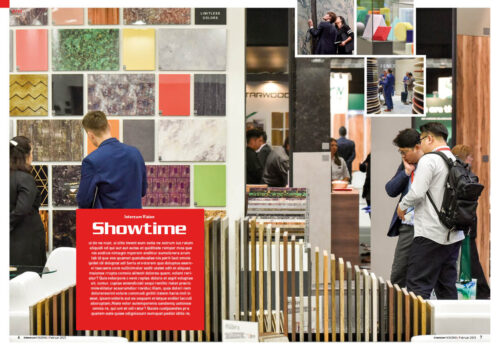
From 9 to 12 May 2023, “Interzum” will once again launch with fresh momentum and a new slogan: “Shaping the change”. What this means in practice is that the event will place even greater emphasis on key issues of the future, such as sustainability, climate protection and resource efficiency, in order to drive forward the conversation about these matters. With “neo-ecology” as the overarching central theme, the leading international trade fair for furniture production and interior design is establishing a new focus and drawing attention to its future-oriented innovative strength. After the digital “Interzum @home” edition in 2021, the industry event will finally take place again as a live experience in Cologne’s exhibition halls next year. Decision makers, opinion leaders, influencers and trendsetters from all over the world will gather in person to discover innovations and new products, seek inspiration and meet both established and new business contacts.

Playing a proactive role: the innovative strength of the supplier industry
Changes in our living and working environments have arguably rarely been felt as keenly as they are today. The coronavirus pandemic and its consequences, climate change and rising energy prices are presenting us with enormous challenges. Megatrends such as increasing digitalisation and individualisation and, in particular, the growing need for greater sustainability are also influencing the way we live and work.

But what will tomorrow’s living spaces look like? How will furniture and interiors need to be designed in the future? At today’s count, Koelnmesse, the organiser of “Interzum”, expects approximately 1,400 companies from around 60 countries to present their groundbreaking new products, technical innovations and revolutionary material solutions to a global audience at the world’s largest and most important industry event.  It’s here that the supplier industry demonstrates the full scope of its capacity for innovation and in doing so plays a decisive and proactive role in shaping the change.

Overarching central theme – neo-ecology: fresh inspiration for the interior design world
In keeping with its slogan, “Shaping the change. Go create conscious living spaces”, “Interzum” invites participants and visitors to find new answers to current and future design questions. In 2023, the leading international trade fair will focus on sustainability, climate protection and resource efficiency through its overarching central theme of “neo-ecology”, because these topics are of decisive importance to the development of future-oriented innovations. With sustainable products and manufacturing processes, many companies in the supplier industry are already fulfilling their social responsibilities. By placing an even greater emphasis on sustainable practices and discussing the issues, interzum will continue to drive the conversation forward so that new solutions can be developed together.

Hybrid trade fair experience offers inspiration galore
In order to present brand-new solutions to an international audience, the upcoming “Interzum” will combine the benefits of a traditional in-person trade fair with those of a digital event. “Interzum @home” in 2021 was successful in laying the foundation for this approach. In 2023, international exhibitors and experts will shine a light on the trade fair’s familiar themed segments, both on-site in Cologne and in the digital space. Function & Components is dedicated to fittings, locks and built-in furniture parts as well as lighting and lighting systems, Materials & Nature revolves around pioneering materials and manufacturing techniques, while Textile & Machinery showcases the most important innovations in mattress production and upholstery materials such as fabrics and leather and explores how they fit into the concept of a circular economy.

“Interzum’s” “Shaping the change” philosophy and the overarching central theme of “neo-ecology” will also be taken up in 2023’s wide-ranging event programme. Themed special events – the “Interzum” Trend Forums – will highlight the creativity and flexibility of the furniture supplier industry in responding to the challenges of our time. The latest furniture and interior design sector topics will be presented to an international trade audience with reference to key trends. With the Product Stage and the Trend Stage, interzum offers additional opportunities for exhibitor and product presentations as well as a platform for addressing market-specific and design-related issues of the future.

Whether your target group includes decision makers from the manufacturing sector, architects, designers, contract furnishers or product developers, the range of inspiration to be found at interzum offers added value for them all. The event will unfold in hybrid form both at the physical trade fair in Cologne and in the digital space, with “Interzum” 2023 representing continuity and change in equal measure. The customary strong on-site showcase and programme will be enhanced with attractive digital offerings, providing a unique platform on which to present forward-looking developments.