Making laminate flooring recyclable
EPF and Unilin are partners in the European Horizon 2020 project CISUFLO (CIrcular SUstainable FlOor coverings), which has as its main objective the transition to a sustainable, circular flooring sector and is supported by the European Union with innovation funding. The consortium consists of 19 partners: Industry partners, research centers and associations. The project includes laminate, textile and vinyl floor coverings.
The recyclability of products is the key to preserving the planet if the depletion of finite resources is to be prevented. It is therefore important to develop solutions that use innovative recycling technologies to create new flooring products from current flooring materials that are similar to existing ones in terms of function and design – and yet are convincingly recyclable.
Nowadays, laminate flooring in particular and all products containing MDF/HDF are generally considered almost impossible to recycle, and such products often end up in landfills or incinerators at the end of their life cycle. Not a satisfactory result.
To close the recycling loop, Unilin has developed a revolutionary technology based on steam explosion. It enables the extraction of valuable wood fibers from products containing MDF/HDF (especially laminate flooring). These fibers are then processed for reuse and used as a substitute for virgin fibers in an HDF production process. In this way, the main component of a laminate floor, namely the HDF core, can be recycled.
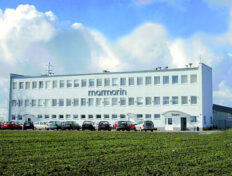
Unilin is at the forefront of CISUFLO and has set up a pilot plant at its MDF factory in Bazeilles, France. Since 2021, this plant has been adapted to the requirements of the recycling process. The current status is that this plant produces more than one ton of recycled fibers per hour, and these fibers are immediately reused in the production of new MDF/HDF products on a continuous basis. This rather small recycling plant already demonstrates the enormous potential of the technology developed: not only the fact that fibers can be recovered and reused without any significant impact on quality, but also that recycling can be carried out under economically attractive conditions. The way the process works, it even saves electrical/thermal energy compared to the energy needed to produce wood fibers based on fresh wood.
This success proves that MDF/HDF is a recyclable product after all and represents a decisive step towards the recyclability for which European wood-based materials are known.
Circular economy, Circularity, EPF, European Panel Federation, European Panel Federation (EPF), Unilin